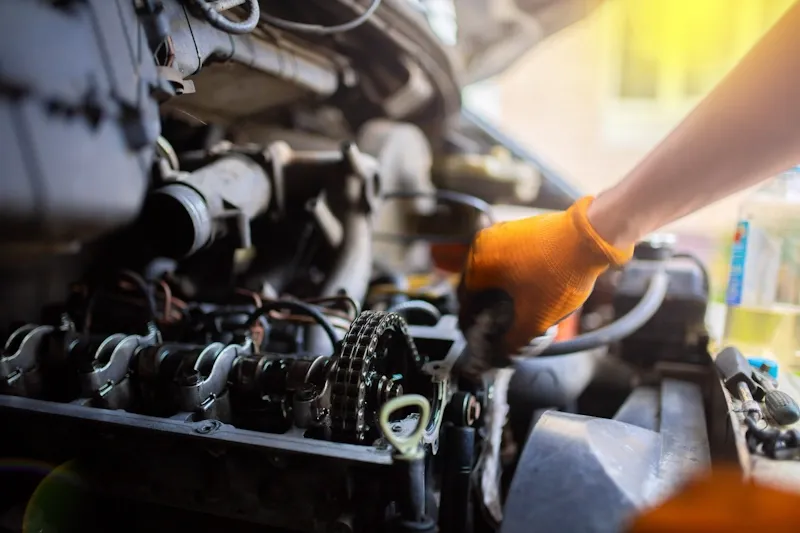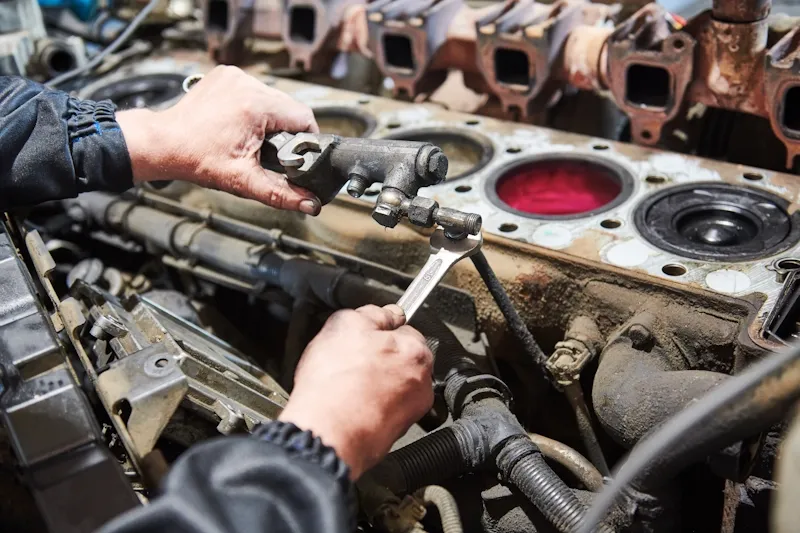
A diesel that starts fine in October can leave you cranking in the dark on the first cold morning of December. Diesels rely on compression heat to fire, and cold steel, thick oil and weak batteries all work against that. Add Central Pennsylvania's road salt and wet, freezing nights, and the parts that were marginal in fall tend to quit all at once.
Fuel gelling gets most of the attention this time of year, and we covered it in Diesel Gelling Defense. This article is about the rest of the cold-start chain: the electrical system, the starting aids, the oil, the coolant and, on air-brake trucks, the air system.
Are your batteries and cables strong enough for a cold crank?
A cold diesel needs far more cranking power than a warm one, and a battery delivers less of it as the temperature drops. That combination is why batteries that seemed fine all summer fail in the first real cold snap.
- Have every battery load-tested or conductance-tested, not just checked with a voltmeter. A resting voltage can look normal on a battery that cannot hold up under load.
- Replace batteries that test weak. There is no need to replace good batteries on a calendar.
- On trucks with two or more batteries, test each one. One weak battery drags down the rest of the pack.
- Clean and tighten the terminals, and look closely at ground cables and frame grounds. Salt corrosion at a ground causes slow cranking that looks like a battery problem.
- Check the alternator output and belt condition. A charging system that falls short will flatten good batteries on short winter runs.
Do the glow plugs or intake heater still work?
Depending on the engine, the starting aid is either glow plugs in each cylinder or a grid heater in the intake. Either one can fail partway and still let the truck start on a mild day.
Watch for long cranking, white smoke that clears after a minute or two, rough running and misfire right after a cold start, or a wait-to-start light that behaves differently than it used to. Any of these on a cold morning is worth a look before it becomes a no-start. Glow plugs and grid heaters can be tested individually, along with the relay or controller that feeds them, and a failed relay is a common and simple fix.
Is the block heater actually heating?
A block heater is the cheapest cold-start insurance a diesel has, but only if it works. Plenty of trucks get plugged in all winter with a dead element or a broken cord.
- Inspect the cord for cracks, crushed spots and corroded prongs. Replace a damaged cord rather than taping it.
- After a couple of hours plugged in, the engine block or the heater hose near the element should be noticeably warm. If it is not, have the element tested.
- Use an outdoor-rated extension cord sized for the load.
- A timer that turns the heater on a few hours before start-up does the job without running it all night.
Is the oil right for cold starts?
Oil that is too thick when cold slows cranking and takes longer to reach the bearings and the turbocharger. Check the engine manufacturer's viscosity chart for the temperatures you will see, since many diesels allow a lighter grade for cold-weather operation. If an oil change is coming due in the next month or two, doing it before winter means the engine starts the season on clean oil of the right grade.
Is the coolant protected, and is the cab heat working?
Coolant does two jobs in winter: it keeps the engine from freezing and it carries heat to the cab and defrost.
- Test the freeze protection with a refractometer. A hydrometer float tester is not accurate on many modern coolants.
- On heavy-duty engines that use supplemental coolant additives, test the additive level with test strips as well. Low additive can lead to liner pitting.
- Look over hoses and clamps. Cold makes old hoses hard and makes weak clamps leak.
- Make sure the heater and defroster put out real heat. Weak cab heat can point to a stuck thermostat, low coolant or a plugged heater core, and a fogged windshield on a salted road is a safety problem.
Will the air system freeze up?
On trucks with air brakes, moisture is the winter enemy. Water that gets past the air dryer can freeze in lines, valves and tanks and leave you with brakes that will not release or a truck that will not build pressure.
- Drain the air tanks and see what comes out. Water or oil means the dryer is not keeping up.
- Listen for the air dryer purge when the governor cuts out. No purge means the dryer is not regenerating.
- Replace the desiccant cartridge on the manufacturer's schedule, and sooner if the tanks are wet.
- If the tanks have automatic drain valves with heaters, confirm the heaters work.
- Do not add alcohol to a system with an air dryer unless the dryer's manufacturer allows it. Alcohol can damage the desiccant and seals.
A quick morning habit pays off all winter: drain the fuel-water separator and the air tanks regularly, and watch how long the truck cranks. A change in any of the three is the early warning.
When to bring the truck in
If the truck already cranks slowly, smokes white for longer than it used to, or the tanks are coming up wet, have it looked at now rather than on the first zero-degree morning. A pre-winter check of batteries, starting aids, block heater, coolant and air system covers most of what strands diesels between December and March.
Immaculate Kinetics handles diesel engine repair for pickups through buses and heavy trucks, with same-day service and repair available. The shop is also an authorized Webasto service center, for fleets that use fuel-operated heaters to cut down on idling. Call (570) 293-1966, Monday to Friday, 7:30 AM to 4:30 PM, or request service online.
Should I replace my diesel truck's batteries every fall?
No. Test them every year and replace the ones that test weak. On multi-battery trucks, test each battery separately, since one bad battery can pull down the others.
How long should a block heater be plugged in before starting?
A few hours is typically enough to warm the engine. Leaving it on all night uses more power without much added benefit, so a timer is a practical choice. Follow your engine manufacturer's guidance.
Is it better to idle a diesel for a long time to warm it up?
Long idling does little to warm a diesel and can load up the exhaust aftertreatment. A short warm-up followed by gentle driving warms the engine faster. A working block heater, or a fuel-operated heater, reduces the need to idle.